
about

“Our senses create our experience, and when we are in the mind, we tune out sensations, creating a loop of incomplete experiences. Sound can help you break out of that cycle” - Monica
Passionate about helping others Meditatively find their center, connect to their inner power and encouraging the importance of the embodiment of virtues, she uses sound as a the focal point to tune into the present moment, while tuning out the inner chatter. With an emphasis on knowing we always have a choice of where we place our attention, it reveals that our attention is our superpower.
Currently, there are copious studies about the benefits of meditation, more so than the effects of sound, but a skilled practitioner can get people into meditative spaces by the use of overtone emitting instruments played in a soothing manner. While many people claim they “can’t Meditate”, the secret is to have an anchor to stay Present that you can return to when the mind chatter steals the attention away! Sound can be that. With numerous clients reporting the first time they were able to drop in to meditative states during a sound meditation, it reinforces the principle of entrainment. The overtone emitting instruments used to create a soundscape have ratios of tones that undulate harmoniously to help receivers drift into liminal and receptive spaces.

“Sound therapy brings awareness to the inner processes of the mind: the habitual patterns, the good and bad discursive thinking, the judgment, the filters through which we experience the inner and the outer worlds and realities”
Alexandre Tannous
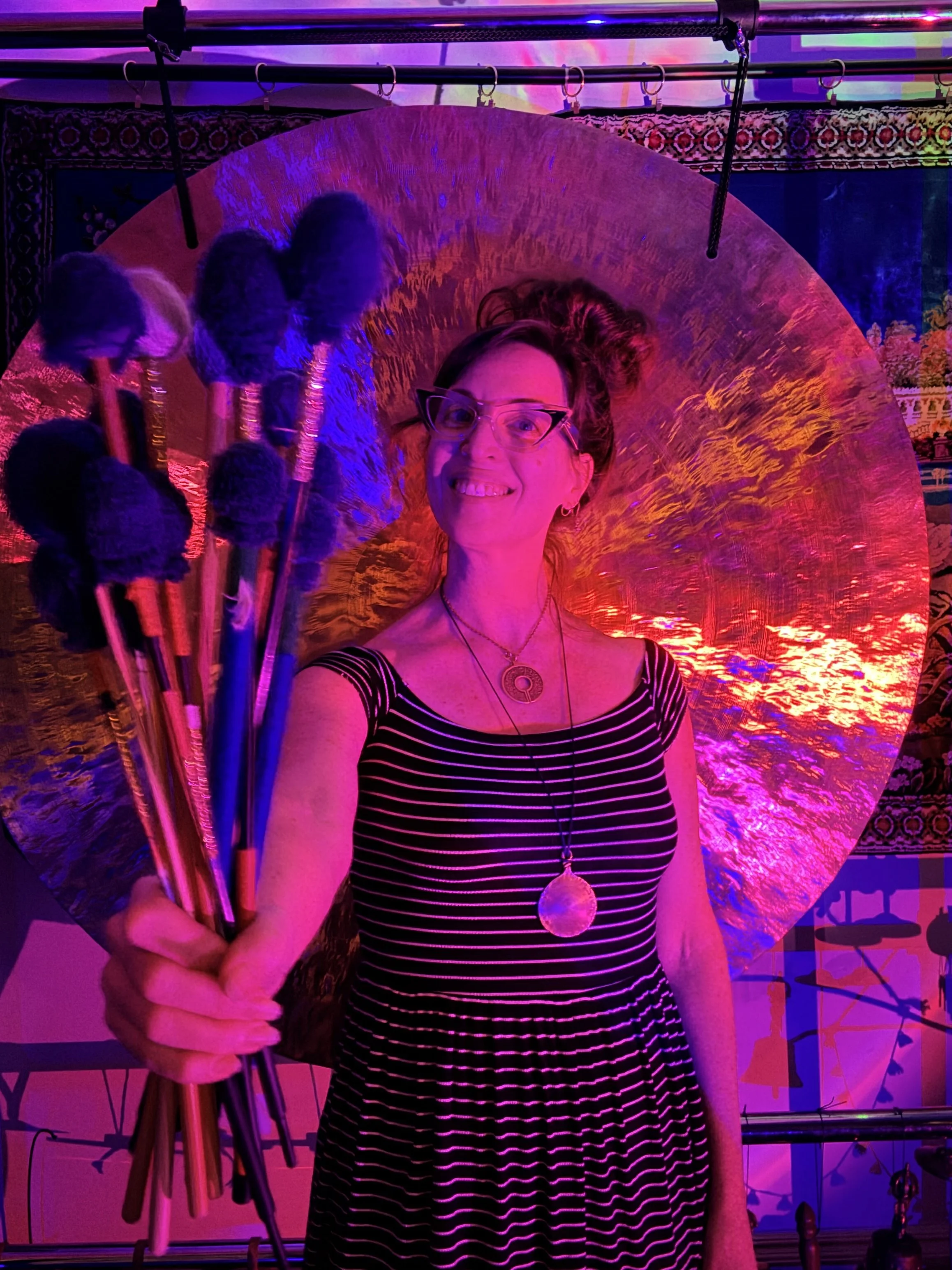
Instruments frequently used in sound therapy:
Singing bowls
Gongs
chimes
Tuning forks
Bells
Sansula
Monolina
Rainstick
Shruti Box
Frame Drum